New preprint · Language models share a readout bottleneck in working memory

NeuroAI · Yale University

Dongyu Gong

I study the algorithms of intelligence, in brains and in machines.

PhD student at Yale. I'm interested in building computational models to understand how attention, memory, and reasoning work in the human brain, and in using first principles from neuroscience to build AI that is more capable and more efficient.

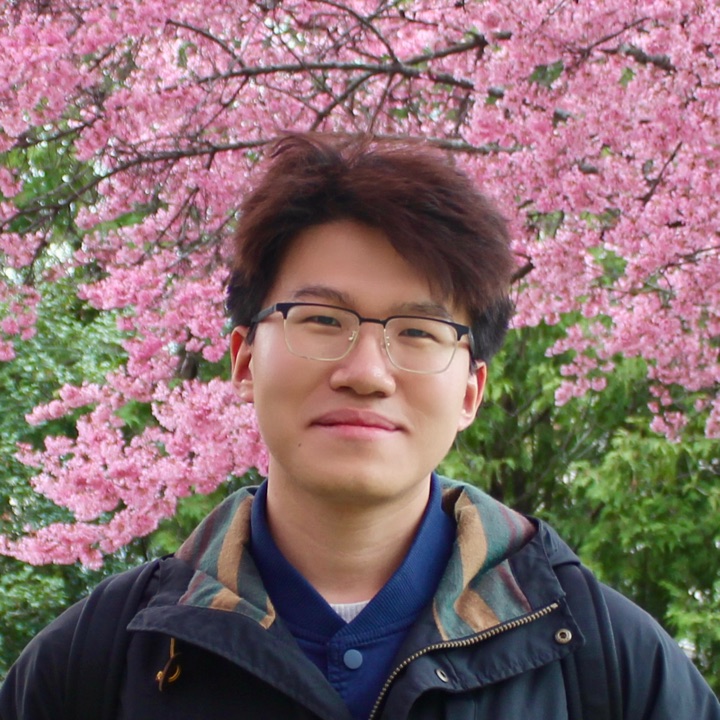
Portrait of Dongyu Gong in front of a blossoming cherry tree

About

Hi, I'm Dongyu.

I'm a PhD student in Neuroscience at Yale University, working with Ilker Yildirim in the Cognitive & Neural Computation Lab and Kia Nobre in the Brain & Cognition Lab. I started my PhD at the University of Oxford as a Clarendon Scholar and moved to Yale with my lab in 2023. Before that, I studied psychology and computer science at Tsinghua University, where I graduated first in my class.

My work combines behavioral and neural experiments (EEG, eye-tracking) with computational models, from Bayesian and Gaussian-process accounts of working memory to mechanistic studies of memory limits in Transformers and large language models.

Outside research, I'm the founder of Oria AI, an evolvable personal AI, and I run hands-on workshops at Yale's Wu Tsai Institute on building LLMs and AI agents from scratch. Away from the screen, you'll find me on a tennis court, out running or hiking, or behind a camera.

Now
PhD, Yale Neuroscience
Before
Oxford · Tsinghua
Focus
Attention · Memory · Reasoning

Research

Two converging paths toward universal algorithms of intelligence

My research sits where neuroscience and AI meet. I travel in both directions: using AI to understand how the brain gives rise to higher-level cognition, and using the brain to build better AI. Followed far enough, both paths should lead to the same place: the shared principles that make any system intelligent.

AI → Brain · models as theories of the mind Brain → AI · biological principles as design blueprints universal algorithms of intelligence Brain AI

Path 1 · AI → Brain

Modeling the mind

I build neural-network models of higher-level cognition, including attention, working and long-term memory, and reasoning, then open them up with tools from dynamical systems theory and information theory to find the computations that explain human behavior and neural data.

  • Why is working memory so limited, and how does the brain allocate its scarce resources to current goals?
  • Does attention select information from working memory and long-term memory through the same mechanism?
  • Can a single inference process explain both behavior and neural circuits?
  • RNNs & Transformers
  • Dynamical systems
  • Information theory
  • Bayesian inference
  • EEG & eye-tracking

Path 2 · Brain → AI

Building intelligence from biology

Brains are intelligent under hard constraints: limited energy, limited capacity, and constant evolutionary pressure. I take principles such as evolutionary fitness and energy minimization and turn them into AI systems that are more effective and more efficient. I also use the toolkit of cognitive science to find where today's models fall short.

  • Do large language models share human-like working-memory limits, and where does the bottleneck lie?
  • How does self-attention shape a model's memory capacity?
  • Which biological constraints are features worth building into AI, rather than bugs?
  • LLM interpretability
  • Cognitive benchmarks
  • Energy-based learning
  • Evolutionary principles

Try it yourself

The N-back task

I've used this classic working-memory test on people and on language models. Letters appear one at a time. Press Space or tap Match whenever the current letter is the same as the one N steps back.

Watch out for lures, letters that repeat at N−1 or N+1 steps. They are near misses, and they are where language models make most of their errors.

?
Press start when you're ready.

Publications

Papers & preprints

  1. 2026

    Language models share a readout bottleneck in working memory

    Gong, D.

    New arXiv preprint · 2610.21176

    Across 15 pretrained LLMs and minimal Transformers, attention usually finds the right item even on failed N-back trials. The limit lies in reading the item out under interference.

  2. 2026

    A single inference process underlies the behavior and neural circuits of visual working memory

    Gong, D., Belledonne, M., & Yildirim, I.

    In submission

    Proposes that one approximate-inference process accounts for both the behavioral signatures and the neural-circuit dynamics of visual working memory.

  3. 2026

    Distinct neural correlates for focusing on similar memory contents originating from current or previous experience

    Gong, D., Draschkow, D., & Nobre, A. C.

    In revision Journal of Cognitive Neuroscience · bioRxiv

    EEG and gaze markers of spatial orienting are robust when attention focuses on working-memory items but weakened or absent for long-term-memory items. Internal attention uses dissociable neural mechanisms.

  4. 2024

    Self-attention limits working memory capacity of Transformer-based models

    Gong, D., & Zhang, H.

    NeurIPS 2024 Workshop on Behavioral Machine Learning

    Transformers trained on N-back learn to attend to the N-back position. Attention entropy rises with N, which points to dispersed attention as a source of capacity limits.

  5. 2021

    A saliency-specific and dimension-independent mechanism of distractor suppression

    Gong, D., & Theeuwes, J.

    Attention, Perception, & Psychophysics, 83, 292–307

    Learned suppression at a likely distractor location is tuned to the salience of the distractor that appears there, trial by trial.

News

Recently

  1. New preprint: Language models share a readout bottleneck in working memory.

  2. Organizing the Building AI Agents from Scratch workshop series at Yale's Wu Tsai Institute.

  3. Mentoring in the Transmitter Mentorship Program at CCN 2026.

  4. Attending YC Startup School in San Francisco.

  5. New preprint on bioRxiv on the distinct neural correlates of attending to working vs. long-term memory.

  6. Two talks at VSS and MODVIS on adaptive computation in working memory.

  7. Received the Rothberg Build Fund from Yale Ventures to develop Oria AI.

  8. Launched the Building LLMs from Scratch workshop series. Materials on GitHub.

  9. Presented an algorithmic model of working memory at CCN 2025 in Amsterdam.

  10. Our paper on attention in working and long-term memory is out in Nature Communications.

  11. Paper accepted at the NeurIPS 2024 Workshop on Behavioral Machine Learning.

  12. Participant in the Analytical Connectionism Summer School.

  13. Presented our ChatGPT working-memory paper at AAAI-24 in Vancouver.

Talks

Selected talks

  • Adaptive computation in working memory: goal-conditioned sparse variational Gaussian process explains retro-cue benefits and interference dynamics

    Vision Sciences Society Annual Meeting · St. Pete Beach, FL

  • A variational framework for adaptive working memory: modeling goal-directed resource allocation through sparse Gaussian process approximation

    MODVIS 2026: Computational and Mathematical Models in Vision · St. Pete Beach, FL

  • EEG signatures of orienting attention to long-term vs. working memory contents

    Cognitive Neuroscience Society Annual Meeting · Toronto, Canada

  • Dissociable neural processes during attentional selection within working memory and long-term memory

    Society for Neuroscience Annual Meeting · Washington, D.C.

Teaching & community

Teaching, service & outreach

Teaching

  • Mental Lives of Babies and AnimalsTeaching Fellow, Yale · Spring 2026
  • Introduction to Cognitive ScienceTeaching Fellow, Yale · Fall 2025
  • Minds, Brains, and MachinesTeaching Fellow, Yale · Fall 2024
  • The Human BrainTeaching Fellow, Yale · Fall 2024
  • CognitionTutor, Oxford · Michaelmas 2022

Workshops & outreach

  • Building AI Agents from ScratchOrganizer, Wu Tsai Institute · Fall 2026
  • Building LLMs from ScratchOrganizer, Wu Tsai Institute · Spring 2026
  • Transmitter Mentorship ProgramMentor, CCN 2026
  • The Present and Future of AIPanel organizer & moderator, Yale US–China Forum 2025
  • NeuroAI ReadingsA curated, regularly updated reading list

Academic service

  • Program CommitteeAAAI-26, AAAI-27, UniReps 2026
  • Workshop reviewerICLR 2025 Re-Align · NeurIPS 2024 BehavioralML · ICML 2024 LLMs & Cognition
  • Journal reviewerCommunications AI & Computing, Scientific Reports, Information Fusion, Frontiers in Cognition, Heliyon

Selected honors

  • Fan Family FellowshipYale
  • Rothberg Build FundYale Ventures · 2026
  • Clarendon ScholarshipOxford · 2021
  • MRC StudentshipUK Medical Research Council · 2021
  • Gates Cambridge ScholarshipCambridge · 2021 (declined)
  • ValedictorianTsinghua · 2021
  • Tsinghua Presidential Award10 of 14,000+ undergraduates · 2020
  • China National Scholarship2018, 2020

Contact

Let's talk about minds and machines.

I'm always happy to hear about collaborations, speaking invitations, or just interesting ideas at the intersection of neuroscience and AI.

dongyu.gong@yale.edu